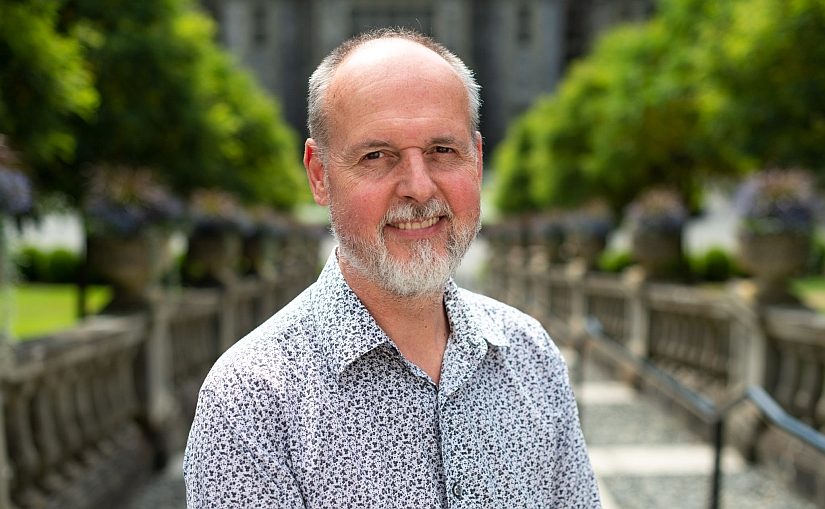
Bill Durodié is Senior Lecturer in Risk and
Corporate Security at Cranfield University. He was previously Director
of the International Centre for Security Analysis, and Senior Research
Fellow in the International Policy Institute, within the 5* Research Assessment
Exercise rated War Studies Group of King's College London.
His main research interest is into the causes and consequences
of our contemporary consciousness of risk. He is also interested in examining
the erosion of expertise, the demoralisation of élites, the limitations
of risk management and the growing demand to engage the public in dialogue
and decision-making in relation to science.
Bill was educated at Imperial College, the London School
of Economics, and New College Oxford. He is a Fellow of the Royal Society
for the Arts (FRSA), an Associate Fellow of Chatham House (the Royal Institute
of International Affairs), an Associate of the Royal College of Science
(ARCS), a Member of the Society for Risk Analysis, and an Advisory Forum
Member of the Scientific Alliance.
His work has appeared and been commented on in
a wide range of publications, and he is regularly requested to provide
expert commentary for television and radio broadcasts. Bill featured in
the BAFTA award-winning BBC documentary series produced by Adam Curtis:
The Power Of Nightmares: The Rise of the Politics of Fear (read
more about this programme here).
Bill is one of the initiators of the Manifesto Club (www.manifestoclub.com).
Latest publications:
Homegrown nihilism - the clash within civilisations
The Smith Institute Terrorism reflects a wide spectrum of causes and beliefs. Individuals who trained in camps in Afghanistan have different motivations from those who act out of a sense of vengeance in the Gaza strip. Some groups may hold global pretensions, but most have amore limited, regional focus. What it is that propels young men from Britain – individuals with no tangible connection to anywhere else much beyond these shores – to choose to be, or to support, terrorists? Read on [pdf format]
Resilience in the face of terrorism
University of Warwick Business School, 9 March 2007 A video podcast of a lecture on the roots of modern terrorism and the issue of risk. Read on
Global terrorism: what should we really fear?
Britain Today, March 2007 The immediate problem posed by terrorists remains extremely small. But there remains the far larger problem of defining who we are, what values we uphold, and where we intend to go in the twenty-first century. Read on [pdf format]
In Conversation with Robyn Williams
ABC Radio National, Australia, 28 September 2006 Are London bombers more likely to be hardened, trained members of terrorist squads or misguided young men on eccentric missions? Read on
An mp3 version of this interview is available here.
We are the enemies within
Times Higher Education Supplement, 22 September 2006 It is not a clash of civilisations but our own cultural self-loathing and pessimistic outlook that motivates young terrorists, many of them born in the West. Read on
Terrorism expert on UK plane plot
Lateline (ABC, Australia), 11 August 2006 Transcript of interview in the wake of the increased security measures at UK airports and arrests on 10 August. Read on [pdf format]
Risk and the Social Construction of ‘Gulf War Syndrome’
Philosophical Transactions of the Royal Society, (2006) 361, 689–6 It may be that the search for a scientific or medical solution to Gulf War Syndrome was misguided. If there is such an entity, it appears to have much in common with other 'illnesses of modernity', whose roots are more socially and culturally driven than what doctors would conventionally consider to be diseases. Read on [pdf format]
Other publications include:
What can the science and technology community contribute?
in Science and Technology Policies for the Anti-Terrorism Era, edited by A. James The role of science and technology in combating the global war on terror. Read on [pdf format]
Terrorism and community resilience
Chatham House briefing paper, ISP/NSC Briefing Paper 05/01, July 2005, pp.4-5 The role of social bonds and political purpose in dealing with adversity. Read on [pdf format]
Facing the possibility of bioterrorism
Current Opinion in Biotechnology, 2004, 15:264-268 Bioterrorism provides a powerful metaphor for élite fears of social corrosion from within. Accordingly, a broader historical and cultural perspective is required to understand why individuals and societies feel so vulnerable to what remain largely speculative scenarios. Read on [pdf format]
Political tunnel vision is today’s real terror
THES, 24 March 2004 In retreating from the world and politics, we all become more vulnerable - as the people and politicians of Spain have learnt. Read on
Limitations of Public Dialogue in Science and the Rise of New ‘Experts’
Critical Review of International Social and Political Philosophy, Vol. 6, No. 4, Winter 2003 Read on [pdf format]
|